

Explore Málaga: Seven Must-See Streets That Whisper History

To truly grasp the essence of Málaga, all you need is a pair of comfy shoes and a dash of curiosity. Stroll through its iconic streets, pause to admire the architecture, or perhaps duck into a museum, palace, or two. You’ll find the city’s history not just in its museums, but etched into its very pavements. So, without further ado, let’s take a wander down seven streets that you simply cannot miss when in Málaga.
Calle Marqués de Larios: The Larios Family’s Gift to Málaga
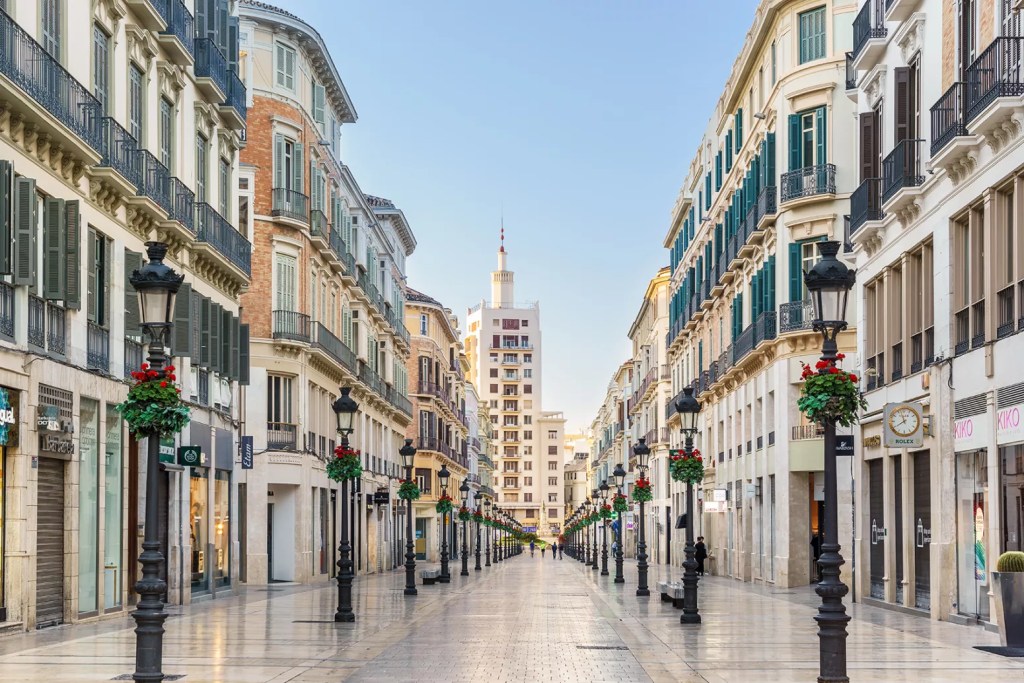
First up is Calle Marqués de Larios. The architecture here is something to marvel at, courtesy of Eduardo Strachan, who was clearly inspired by the Chicago school of design. He dreamt up this elegant street with its curved corners, symmetrical beauty, and an invisible vanishing point where all the lines meet. Today, Calle Larios is the stage upon which Málaga’s seasons and festivals play out—be it Christmas, Carnival, or even Larios Fashion Week. And of course, it’s a shopper’s paradise with historic stores that are a must-visit.
Manuel Agustín Heredia: The Avenue of Progress

Not just a street, but an avenue with grand ambitions, Manuel Agustín Heredia—often dubbed “Muelle Heredia”—is a strip of history laid upon reclaimed land. Named after a 19th-century industrialist who was instrumental in Málaga’s industrialisation, this avenue was once the site of the city’s early 20th-century fairs. Now, it’s flanked by buildings that stand as sentinels of the Mediterranean, including law courts, health centres, and even the Customs Office. If you’re looking for a slice of Málaga’s industrial past, this is where it’s been immortalised in concrete and stone.
Calle Alcazabilla: A Journey Through Time

Next, we meander down Calle Alcazabilla, where Málaga’s heritage truly comes alive. Stretching from the Palacio de la Aduana to Calle Victoria, this street is named after the Alcazaba fortress, its Arabic name al-Qasabiya translating to “street of the Alcazaba”. Here, history practically leaps out at you, with the Roman Theatre from the 1st century BC taking centre stage. And if that’s not enough, the Palacio de la Aduana—now the Málaga Museum—houses countless artefacts that span the ages. Add to this the nearby Picasso Museum, the Roman garum pools, and the charming Albéniz Cinema, and you’ve got yourself a historical jackpot.
Calle Granada: A Walk Through the Old Medina

Calle Granada is where the ancient medina of Málaga beckons. This winding, narrow street, connecting Plaza de la Constitución with Plaza de la Merced, is the very definition of ‘full of character’. Once only stretching to the Granada gate in the city wall, this street now leads you into the heart of the old Jewish quarter and past landmarks like the Picasso Museum and the Church of Santiago, where young Pablo Picasso was baptised. With its vibrant craft shops, bustling terraces, and eateries, Calle Granada is the perfect place to soak up the local vibe.
Calle Victoria: The Artery of Tradition

On to Calle Victoria, the main street of a district that shares its name with Málaga’s patron saint, Santa María de la Victoria. This street is steeped in history—trodden by the troops of the Catholic Monarchs during their conquest of the city. It’s lined with landmarks like Plaza de la Victoria, the San Lázaro church, and the well-known Maristas School. The spirit of tradition hangs in the air here, making it a must-see for history buffs and curious wanderers alike.
Calle Compañía: Where History and Art Collide
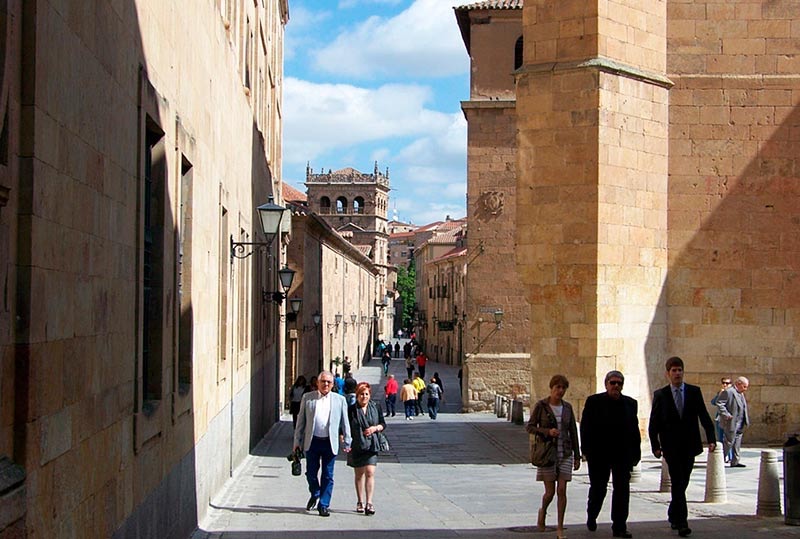
Calle Compañía is a short but sweet street that connects the Plaza de la Constitución with Puerta Nueva. Originally known as Calle de las Guardias, it earned its current name thanks to the Jesuits who established the Novitiate of San Sebastián here. Today, it’s home to the Carmen Thyssen Museum Málaga, housed in the Palacio de Villalón, and the grand neo-Gothic Church of the Sacred Heart. The street’s historical significance is palpable, with echoes of the past in every step you take.
Calle Císter: The Heart of Historical Málaga
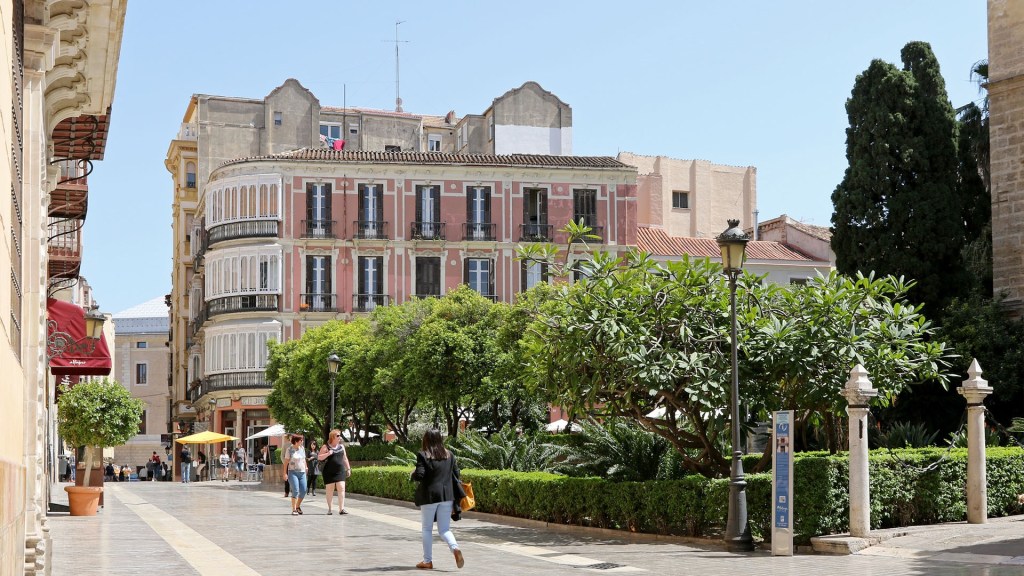
Finally, we have Calle Císter, a street that oozes history and art. Spanning from Plaza de la Aduana to the junction with Calle Santa María and Calle San Agustín, it’s named after the Cistercian nuns who gathered here in the 17th century. Some historians suggest its origins could even date back to Roman Málaga, but what’s certain is that it’s home to some of the city’s most impressive landmarks. The Cathedral of Santa María de la Encarnación, the Palace of Zea-Salvatierra, and the Félix Revello de Toro Museum are just a few of the gems you’ll find here.
So there you have it—seven streets that are more than just routes from A to B. They’re living, breathing chapters of Málaga’s history, each one waiting for you to discover its story.
Discover more from interpreter today
Subscribe to get the latest posts sent to your email.
 interpreter today
Leave a comment