

Ethics & Dilemmas
Ethical tension, visibility, and choosing the least wrong move.

It was one of those moments where everything slowed down, just for a second. The Deaf client was visibly distressed, describing an experience that was clearly personal and painful. The hearing professional shifted uncomfortably, reached for a procedural response. And me? I was right there in the middle—watching it unfold, interpreting faithfully, but feeling every inch of the gap between what was being said and what was being felt.
I had a choice. Stay strictly neutral, as training had taught. Or adjust tone slightly to carry the weight of the Deaf client’s emotion more fully into English—risking being seen as partial or “too involved.” Either way, there was no clean path. Just a series of options that felt, in varying degrees, unsatisfactory.
And that’s the thing about ethical dilemmas in interpreting. They don’t arrive with signs saying This Is A Dilemma. They sneak in sideways, often wrapped in routine, and leave you quietly carrying the weight of the decision you made. Or didn’t make.
This post is about those moments. The ones where neutrality isn’t available—or wouldn’t be neutral anyway. Where every option carries risk, and the best you can do is choose the least wrong move.
The Myth of Neutrality
We’re taught, early and often, that interpreters must be neutral. It’s a foundational principle in our training, our codes of conduct, and often in how others perceive our role: the silent conduit, the impartial bridge, the body in the corner who doesn’t get involved.
But the reality? It’s messier than that.
True neutrality implies that you can step outside of power dynamics, culture, and emotion—that you can be present without participating. But we don’t work in labs. We work in hospitals, classrooms, courtrooms, therapy sessions, disciplinary meetings, domestic settings—places where power is very much in play, and where being “neutral” can itself be a kind of decision.
Because sometimes, strict neutrality isn’t neutral at all. Sometimes, it reinforces the status quo. Sometimes, it means staying silent when something needs clarifying, softening the truth, or allowing a misunderstanding to sit because “it’s not our place” to intervene.

Deaf academics and community leaders have spoken to this tension for years—challenging the notion that neutrality should mean invisibility, especially when access, equity, and human connection are at stake. Sociolinguistic research on interpreting suggests that neutrality is a paradox: an ideal rooted in early information‑processing models that doesn’t hold up when we recognise interpreted communication as an interactive, culturally situated event. (Gallaudet University Press)
“To claim a position of neutrality is to ignore the fact that interpreters inevitably influence the flow and interpretation of discourse.”
Janet Marszalek, in Sign Language Interpreting: Theory and Practice
This isn’t to say we throw all boundaries out the window. But it does mean we have to look more critically at what we mean by neutrality. Who defines it? Who benefits from it? And when does it stop serving the people we’re there for?
Dilemmas in Motion – Real-Time Decisions
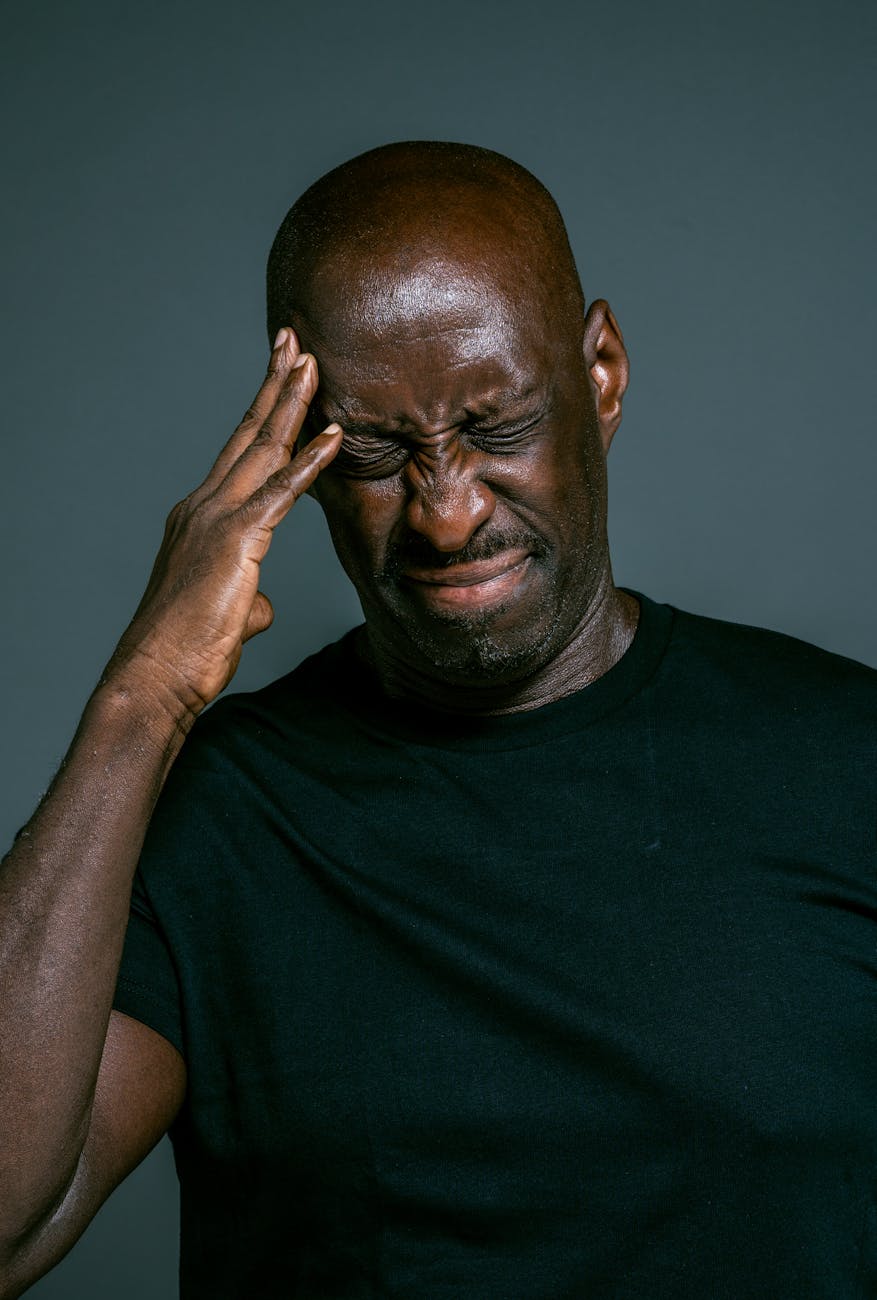
Dilemmas rarely arrive labelled as such. They don’t tap you on the shoulder and politely announce their presence. They appear mid-sentence, mid-glance, mid-breath—just as you’re processing one utterance and preparing for the next. And yet, in the space of a second, you’re weighing not just words, but consequences.
Do I soften that bluntness to preserve rapport? Do I interrupt to clarify, knowing it could throw the speaker off? Do I intervene with a cultural reference or let the moment pass and tidy it up later? Each option carries risk—not just of misunderstanding, but of being seen as biased, unprofessional, or too visible.
And that’s the rub. These aren’t just decisions about language—they’re decisions about power, presence, and ethics. About who gets heard and how. About what gets smoothed over, and what gets named.
Sometimes, we default to instinct. Other times, we try to buy time—a pause, a question, a look to the Deaf client for permission or guidance. And occasionally, we walk away from the job still carrying the decision we made, unsure whether it was the right one—or just the least wrong one.
What’s certain is that these moments aren’t rare. They’re built into the fabric of the work. And recognising them as ethical moments—not just technical ones—is a step toward taking them seriously.
The Cost of Visibility – Emotional and Professional Stakes
There’s a certain comfort in the idea of invisibility. If we’re not seen, we can’t be blamed. If we’re just “passing messages,” we’re safe. But in reality, moments of ethical tension often demand something else: presence. And presence comes with visibility.
Making a choice—any choice—in a grey area makes us visible. We may be questioned. We may be seen as “taking sides,” even when all we’ve done is interpret tone more faithfully than the room was ready for. We may be thanked by one party and quietly distrusted by another. And sometimes, we may not be able to explain what we did in a way that feels satisfying—because the explanation lives in a web of context, instinct, and gut-checks that don’t translate easily after the fact. (Anecdote: Dubai travel meet)
This visibility can be exhausting. Emotionally, because we’re holding the weight of other people’s experiences while trying not to insert ourselves. Professionally, because every move can be scrutinised—and few people outside the work truly understand the pressures at play.
It can also be lonely. Dilemmas don’t always make good coffee break conversation, especially if you’re still turning the moment over in your mind, wondering if you misread it—or if it just didn’t have a “right” outcome to begin with.
And yet, this is where the real weight of the job often lives. Not in the technical challenge, but in the ethical discomfort. In being visible, however briefly, for making a call that mattered.
The Cost of Visibility – Emotional and Professional Stakes
There’s a certain comfort in the idea of invisibility. If we’re not seen, we can’t be blamed. If we’re just “passing messages,” we’re safe. But in reality, moments of ethical tension often demand something else: presence. And presence comes with visibility.
I was once interpreting a remote meeting for an international travel company. They were planning holiday venues and trips for Deaf customers and had employed Deaf agents to deliver those services. I was called in last minute, with no prep and little context. It quickly became clear that the company wanted to hear how the Deaf agents would explain travel packages to customers. But as the Deaf team began signing—clearly, confidently, competently—I realised I couldn’t do them justice. I didn’t understand enough about the products or the context to interpret their contributions accurately.
So I did the thing we’re trained to avoid unless absolutely necessary: I stopped the meeting. I explained, plainly, that I was unprepared and that the Deaf staff were indeed knowledgeable and articulate—but the hearing managers weren’t hearing that because I couldn’t faithfully render it. The meeting was postponed.
I was visible in that moment—acutely so. And it cost me. Professionally, I worried about being judged as incompetent. Emotionally, I sat with the discomfort of having failed to deliver what I was there to do. But ethically? It was the only honest choice. Because pretending would have served no one—least of all the Deaf staff whose voices I was meant to carry.
These moments are uncomfortable. They can leave a mark. But they also define the deeper integrity of the work: not perfection, but presence; not invisibility, but accountability.
Reflection as an Ethical Act
Some dilemmas resolve in the moment. Others linger. They follow you into the car, into the evening, into the kind of sleep where your brain decides to replay scenes with new edits and imaginary better outcomes. That’s not indulgence. That’s ethical reflection. And it’s a vital part of this work.
Interpreters don’t just operate in real time—we carry the echoes. We look back, sometimes days later, and ask ourselves: Was that the right call? Did I serve the Deaf client well? Did I overstep, or not step up enough? These questions don’t always lead to tidy answers, but they do deepen our practice. They help us see the grey with more nuance. They prepare us for the next time—because there is always a next time.
This kind of reflection isn’t just self-care or professional development. It’s an ethical act. It says: I care about the impact of my choices. It acknowledges that our role is not neutral, and that being an interpreter means holding a certain level of accountability—not for outcomes we can’t control, but for the presence we bring.
And it’s why peer support and supervision matter. Talking these things through—with people who understand the stakes—can transform a moment of private discomfort into a shared learning experience. It takes the loneliness out of ethical uncertainty, and replaces it with something stronger: community, perspective, and the quiet solidarity of “I’ve been there too.”
Closing: When There’s No Clean Answer
Dilemmas don’t tidy themselves away at the end of a job. They stay with us—not as failures, but as reminders that this work is as human as it is linguistic. That we interpret not only language, but intent, emotion, and power. And that sometimes, the best we can do is show up with honesty, presence, and a willingness to carry the tension rather than pretend it isn’t there.
Next time, I’ll be circling back to something that sits alongside these dilemmas: CPD—what it really looks like when we treat development as something living, personal, and far beyond compliance.
Until then, thanks for reading—and for staying in the grey with me.
Further Reading
For those curious to explore the complexity of neutrality, culture, ethics, and interpreter visibility.
• Metzger, Sign Language Interpreting: Deconstructing the Myth of Neutrality
A foundational text challenging the idea of the interpreter as a neutral conduit, and arguing for a more socially situated understanding of interpreting.
• Turner, “The Code and the Culture” (UK)
An insightful critique of the UK’s professional codes and how they align—or don’t—with real-world interpreter practice and Deaf cultural norms.
• Shaw & Russell, Power and Privilege in Interpreting
Explores how interpreters exercise discretion and decision-making within systems of power—and how “neutrality” is often a myth.
• Napier et al., “Mediating Identities” (UK)
A Heriot-Watt study examining how interpreters negotiate representation and trust, particularly in community settings.
• Ackroyd, Working with BSL Interpreters (UK)
A practical look at how Deaf professionals experience interpreted interaction in healthcare settings, with guidance on respectful practice.
Discover more from interpreter today
Subscribe to get the latest posts sent to your email.

